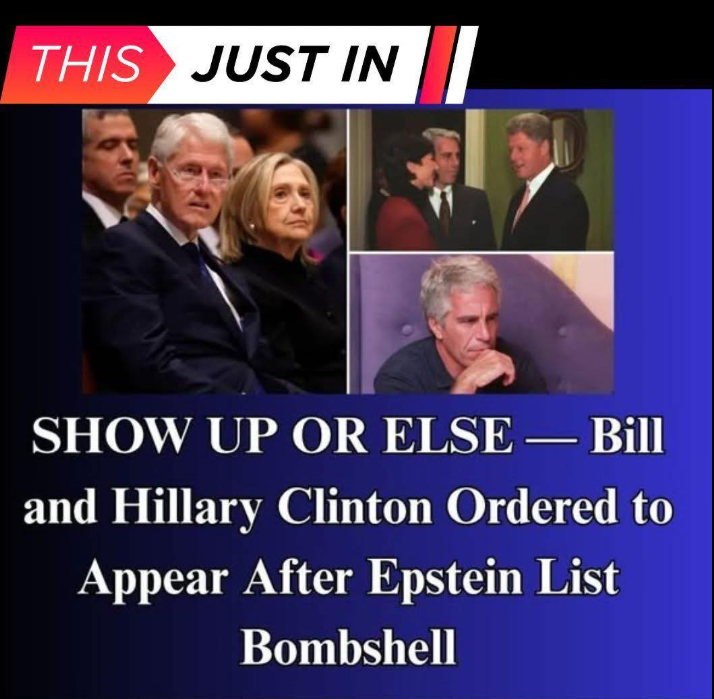
The long-running Jeffrey Epstein scandal has entered a new and more consequential phase as the House Oversight and Accountability Committee moves aggressively to compel testimony and documents from some of the most powerful political and law-enforcement figures of the last three decades. With subpoenas issued to former presidents, cabinet officials, and the Department of Justice itself, Congress is signaling that the era of quiet avoidance surrounding Epstein’s connections may finally be ending.
For years, the Epstein case has existed in a strange limbo. The crimes were real. The victims were real. The convictions were real. Yet the broader network of influence, protection, and institutional failure that allowed Epstein to operate for so long has remained largely unexplored in public view. Now, House investigators are attempting to fill that gap — and they are doing so with unprecedented scope.
A New Phase of Congressional Oversight
At the center of the effort is House Oversight Chairman James Comer, whose committee has broad authority to investigate federal misconduct, abuse of power, and failures within executive agencies. In recent weeks, the committee approved subpoenas compelling testimony from former President Bill Clinton, former Secretary of State Hillary Clinton, multiple former U.S. attorneys general, and former FBI directors. In parallel, the Department of Justice has been ordered to turn over records related to Epstein and his longtime associate, Ghislaine Maxwell.
This marks a notable escalation. Prior congressional inquiries into Epstein have often focused narrowly on prison conditions, plea agreements, or individual prosecutorial decisions. The current effort is broader and more structural. Lawmakers are no longer asking only how Epstein died or why a particular deal was struck. They are asking how the federal system handled Epstein over decades — and whether political power influenced those decisions.
Why the Clintons Are Being Called
Bill Clinton’s inclusion in the subpoena list is not new territory, but it is significant. His past association with Epstein has been publicly documented for years, including multiple flights on Epstein’s private jet and participation in philanthropic initiatives linked to Epstein before his criminal behavior was widely known. Clinton has repeatedly denied any knowledge of or involvement in Epstein’s crimes, and no criminal charges have ever been brought against him in connection with Epstein.
Still, congressional investigators argue that Clinton’s testimony could shed light on what Epstein represented within elite political and financial circles — and how warning signs were handled, ignored, or minimized. Hillary Clinton’s subpoena, while more controversial, reflects the committee’s stated interest in understanding whether any institutional shielding occurred during her tenure as a senior federal official.
Importantly, subpoenas are not accusations. They are legal tools designed to compel information. But the optics are undeniable: Congress is demanding sworn testimony from figures long treated as untouchable.
The Justice Department Under Scrutiny
Perhaps even more consequential than the individual subpoenas is the committee’s demand for records from the Department of Justice. The DOJ is being asked to provide files related to Epstein’s investigations, plea agreements, prosecutorial decisions, and communications spanning multiple administrations.
This strikes at the heart of the Epstein controversy. Epstein’s 2008 non-prosecution agreement in Florida — which shielded him from federal charges despite substantial evidence — has long been cited as one of the most egregious failures of the justice system. That agreement allowed Epstein to serve minimal jail time while continuing to abuse victims for years afterward.
Congress wants to know who approved that deal, who objected, who intervened, and why the normal safeguards failed. The inquiry also extends to the years that followed, including the handling of Epstein after his 2019 arrest and the decisions made before and after his death in federal custody.
The DOJ has confirmed receipt of the subpoena but has so far offered limited public detail about compliance. Historically, executive agencies resist broad document demands, citing privacy concerns, ongoing cases, or institutional privilege. Whether those defenses will hold under sustained congressional pressure remains to be seen.
Former Attorneys General and FBI Directors in the Spotlight
The subpoena list includes former attorneys general from both parties, as well as former FBI directors who oversaw federal law enforcement during critical periods of Epstein’s activity. This bipartisan scope complicates claims that the investigation is purely political. Epstein’s rise and protection spanned Republican and Democratic administrations alike.
By compelling testimony from officials who led the DOJ and FBI, lawmakers are attempting to trace accountability up the chain of command. Was Epstein treated differently because of his wealth and status? Were investigations slowed, redirected, or quietly closed? Did intelligence considerations play a role? And were internal warnings suppressed?
These questions have lingered unanswered for years. Congressional testimony, under oath, may finally force clarity — or at least reveal where responsibility fractured.
Transparency Versus Institutional Resistance
The Oversight Committee’s actions align with broader public demands for transparency surrounding Epstein. Polling consistently shows that Americans across the political spectrum believe the full story has not been told. Distrust of institutions — particularly the justice system — has grown as key details remain sealed or redacted.
At the same time, institutional resistance is expected. Former officials have strong incentives to limit testimony, invoke privilege, or delay proceedings. The DOJ may seek to narrow document production. Legal challenges are almost inevitable.
Yet the political environment has shifted. Epstein’s case is no longer a fringe topic or an online obsession. It has become a symbol of elite impunity — a test case for whether powerful people are truly subject to the same legal standards as everyone else.
The Maxwell Factor
Ghislaine Maxwell’s conviction and imprisonment loom large over the inquiry. Prosecutors argued successfully that she facilitated Epstein’s abuse by recruiting and grooming victims. Yet many questions remain about what Maxwell knows and what information remains undisclosed.
The Oversight Committee has previously sought to depose Maxwell, but agreed to delay questioning pending her appeals process. That decision underscores the complexity of the case: lawmakers want information, but they must navigate ongoing legal constraints.
Still, Maxwell’s conviction confirms a central truth — Epstein did not operate alone. And that reality raises uncomfortable questions about who else enabled him, directly or indirectly.
Political Risk on All Sides
For lawmakers, the Epstein investigation is both an opportunity and a risk. Aggressive oversight can expose misconduct and restore confidence, but it can also backfire if perceived as partisan theater. The inclusion of figures from both parties may help insulate the inquiry from such criticism, but only if the committee maintains procedural rigor.
For former officials, the risk is reputational and legal. Even absent criminal charges, sworn testimony can expose inconsistencies, omissions, or past decisions that look indefensible in hindsight. Silence, however, carries its own cost — reinforcing public suspicion that powerful figures are avoiding scrutiny.
What Comes Next
The coming months will determine whether this investigation produces substantive revelations or dissolves into procedural stalemate. Key milestones include:
– Compliance or resistance from the DOJ
– Depositions of subpoenaed witnesses
– Potential public hearings
– Release of previously sealed or redacted documents
Each step will test the balance between congressional authority and executive resistance.
Why This Matters
The Epstein case is not just about one man or one crime. It is about systems — how influence operates, how accountability fails, and how justice bends under pressure. If Congress succeeds in forcing transparency, it could mark a rare moment of institutional self-correction.
If it fails, the consequences extend beyond Epstein. Public faith in equal justice under law — already fragile — will erode further.
For now, the subpoenas stand as a clear message: the era of automatic deference to power may be ending. Whether that message is enforced remains the central question.