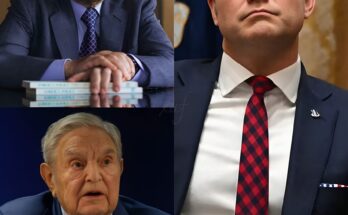
The White House has taken the unusual step of removing a Wall Street Journal reporter from the presidential press pool following the newspaper’s publication of a controversial story alleging past ties between President Donald Trump and Jeffrey Epstein. The move has reignited a long-running debate over press access, retaliation, and the limits of executive discretion when dealing with media outlets that publish disputed reporting.
The decision came just days after the Journal ran a report describing the alleged contents of a decades-old letter that Trump is said to have sent to Epstein for his 50th birthday. The article did not publish the letter itself, nor did it include images of the purported material. Trump has categorically denied the story, calling it fabricated, defamatory, and emblematic of what he describes as systemic media malpractice.
In response, the White House barred the Journal from participating in the press pool covering the president’s weekend trip to Scotland, a move confirmed publicly by Press Secretary Karoline Leavitt.
White House Justification: Access Is a Privilege, Not a Right
In a statement to reporters, Leavitt emphasized that no media outlet is entitled to special access to the president, particularly in restricted environments such as the Oval Office, Air Force One, or private workspaces.
She framed the decision not as censorship, but as an exercise of discretion, stating that the administration has broad authority to decide which outlets receive limited, high-value access. According to the White House, the Journal’s reporting crossed from aggressive journalism into what the administration characterizes as “fake and defamatory conduct,” prompting the exclusion.
The press secretary also stressed that the administration continues to expand access to a wide range of outlets, arguing that removing one organization from a specific pool does not amount to silencing the press.
Trump Escalates With Defamation Lawsuit
The access dispute is unfolding alongside a major legal escalation. President Trump has filed a defamation lawsuit against The Wall Street Journal and its parent company, seeking $10 billion in damages. The complaint alleges that the newspaper knowingly published false claims, failed to meet basic journalistic standards, and relied on unverifiable assertions while withholding the supposed primary evidence from readers.
According to the lawsuit, the absence of the alleged letter or illustration is not a minor editorial choice but central to the claim that no such document exists. Trump’s legal team argues that publishing descriptions of unproduced evidence—while presenting them as credible—constitutes reckless disregard for the truth.
The Journal has not conceded any wrongdoing and maintains that its reporting meets professional standards, though it has declined to release the alleged materials.
A Familiar Pattern: Media Access as Leverage
This is not the first time the Trump administration has restricted media access following disputes over coverage. Earlier in the year, the White House limited access for the Associated Press after the organization declined to adopt the administration’s preferred terminology for the “Gulf of America” in its style guide.
That dispute resulted in a legal challenge, with a lower court initially ordering the restoration of access. However, an appellate court later paused that ruling, leaving the administration’s authority in a gray zone that legal scholars continue to debate.
Together, these incidents illustrate a broader strategy that critics describe as using access as leverage, while supporters argue it is a legitimate response to perceived bias and misinformation.
Legal Framework: What the First Amendment Does—and Does Not—Guarantee
The First Amendment protects the press from government censorship and retaliation for protected speech. However, courts have consistently ruled that it does not guarantee journalists special access to government officials or facilities.
Press pools exist primarily for logistical reasons, not as constitutional entitlements. Because space and security constraints limit access, administrations have historically exercised discretion in selecting participants.
That said, courts have also warned that access decisions cannot be based purely on viewpoint discrimination. If an administration were found to systematically exclude outlets solely because of critical coverage, it could raise serious constitutional concerns.
Whether the White House’s action against the Journal crosses that line is an open question—one likely to be debated in legal and academic circles rather than resolved quickly in court.
Ethical Questions for Journalism
Beyond the legal fight, the episode raises uncomfortable questions for the media industry itself.
Publishing allegations without presenting primary evidence places extraordinary trust demands on readers. While journalism does not always require releasing sensitive documents, withholding all direct evidence while asserting detailed claims invites skepticism—particularly when the subject denies the material exists and litigation is imminent.
Media critics argue that in high-stakes cases involving reputational harm, transparency is not optional. Others counter that protecting sources and avoiding dissemination of potentially offensive material can justify editorial restraint.
The Journal’s decision not to publish the alleged