Getty Images
This article may contain commentary
which reflects the author’s opinion.
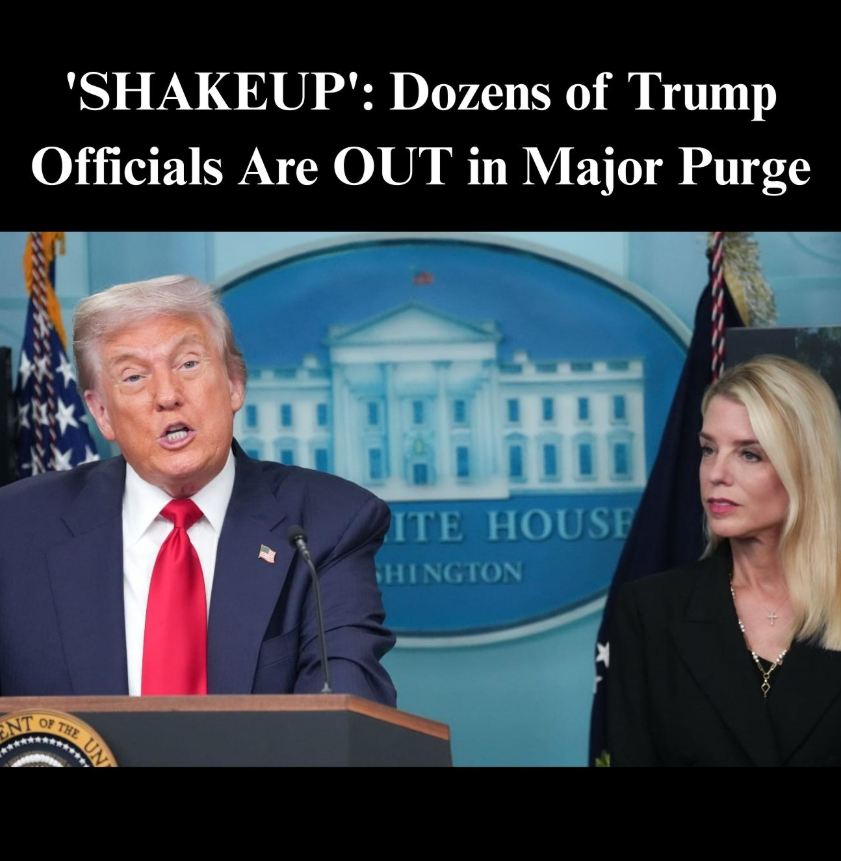
The Trump administration has ordered dozens of U.S. ambassadors appointed during former President Joe Biden’s tenure to return home by mid-January, in what officials describe as a broad realignment of U.S. diplomacy under the “America First” agenda.
Advertisement
At least 29 mission chiefs across Africa, Asia, Europe, and the Middle East have received notices ending their assignments, according to two State Department officials who spoke anonymously to The Associated Press. The decision affects a mix of Foreign Service professionals and nonpolitical appointees, an unusually large number for midterm adjustments.
“This is a standard process in any administration,” a senior State Department official said. “An ambassador is a personal representative of the president, and it is the president’s right to ensure that he has individuals in these countries who advance the America First agenda.”
Presidents traditionally recall politically appointed ambassadors from prior administrations, but career diplomats — members of the permanent Foreign Service — are rarely removed en masse because they are expected to serve apolitically regardless of who occupies the White House.
The move is seen as part of a broader restructuring of the diplomatic corps. The administration has long expressed skepticism of the State Department’s institutional culture, viewing many of its senior officials as resistant to Trump’s foreign policy objectives.
According to reports from Politico, ambassadors were informed of their recalls via phone and instructed to vacate their posts by Jan. 15 or 16. Affected countries span nearly every continent, with Africa bearing the greatest share — including Burundi, Cameroon, Gabon, Ivory Coast, Niger, Nigeria, Rwanda, Senegal, Somalia, and Uganda among others.
Advertisement
In Asia, recalls include the Philippines, Vietnam, Laos, Fiji, Papua New Guinea, and the Marshall Islands. Several European posts — Armenia, Montenegro, North Macedonia, and Slovakia — were also affected, alongside embassies in Egypt, Algeria, Guatemala, and Suriname.
The ambassadors, though required to leave their posts, retain their Foreign Service status and may receive new assignments in Washington or other posts abroad, the officials said.
The American Foreign Service Association (AFSA), the professional union representing U.S. diplomats, expressed concern over the scope of the shakeup. Its president, John Dinkelman, told Politico that the group had received “anecdotal reports” of career diplomats being abruptly told to depart without explanation.
Advertisement
“It continues to undermine the confidence in the professional Foreign Service’s ability to effectively carry out the policies of the elected leadership of our nation,” Dinkelman said, arguing that the mass recall could damage the continuity and credibility of U.S. foreign policy.
The Trump administration rejected that criticism, insisting the realignment is both lawful and routine.
“Ambassadors serve at the pleasure of the president,” the department reiterated in a written statement. “President Trump believes the United States is best represented by those who share his commitment to American sovereignty, secure borders, and reciprocal trade — principles that reflect the will of the American people.”
The recalls follow earlier steps by the administration to replace politically appointed ambassadors installed by Biden in key posts, but this latest round marks the first large-scale rotation of career diplomats since Trump’s return to office.
Critics in Congress — particularly Senate Democrats — have accused the administration of hollowing out the State Department and jeopardizing American influence abroad. “We have about 80 vacant ambassadorships,” said Sen. Jeanne Shaheen (D-NH), the ranking member of the Senate Foreign Relations Committee.
“President Trump is giving away U.S. leadership to China and Russia by removing qualified career ambassadors who serve faithfully no matter who’s in power.”
Supporters of the shakeup argue that it represents a necessary correction after years of entrenched bureaucracy and politically biased policymaking.
“The president was elected to disrupt the status quo,” said one senior administration official. “This is about restoring accountability to a diplomatic corps that too often resists the policies of the people’s elected government.”
The transition comes as the administration intensifies efforts to renegotiate trade deals, tighten border cooperation, and recalibrate alliances in Africa and Asia to counter China’s growing influence.
Officials say the moves will ensure that future ambassadors “advance the president’s priorities without obstruction.”
While unusual in scope, the recall underscores a central theme of Trump’s second term: a willingness to challenge entrenched norms within Washington’s foreign policy establishment — even if doing so sparks controversy.
Read More