
This article may contain commentary
which reflects the author’s opinion.
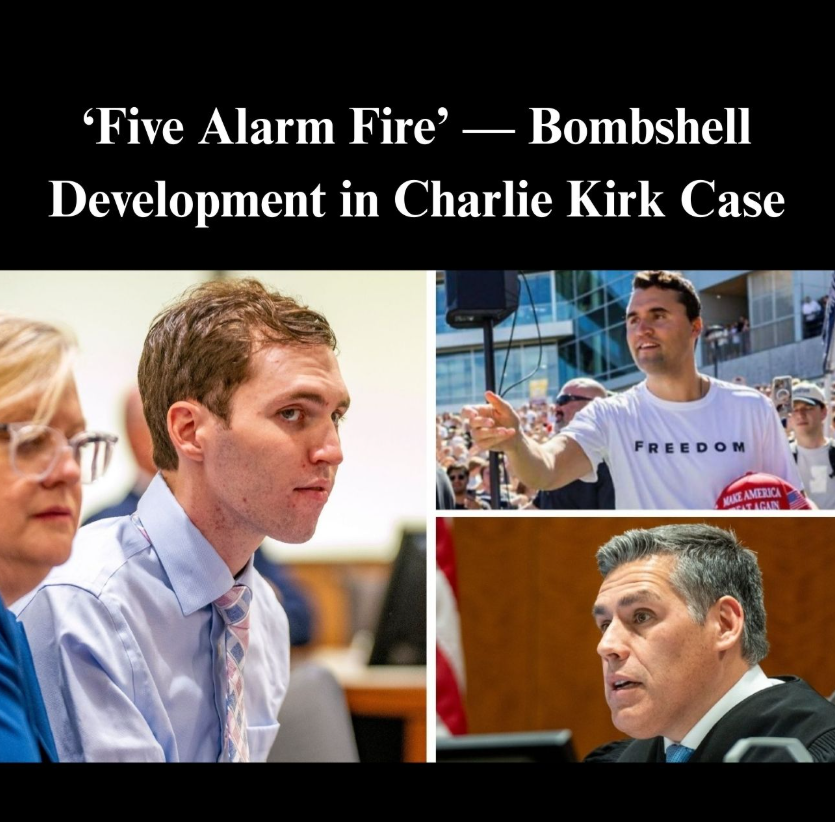
Defense lawyers for the man charged with the murder of conservative activist Charlie Kirk are requesting that a Utah judge remove the Utah County Attorney’s Office as a whole from the case, claiming that prosecutors have a significant conflict of interest that is directly related to the fatal shooting.
Tyler James Robinson’s lawyers claim in a court document that Fox News was able to obtain that senior members of the prosecutor’s office had “personal and familial connections to the crime scene,” neglected to step aside, and let emotion affect the decision to seek the death penalty.
Robinson is charged with aggravated murder in the shooting that killed Kirk on September 10, 2025, during a Turning Point USA event at Utah Valley University in Orem, where approximately 3,000 people were present.
The motion states that a close relative of a senior supervisory prosecutor in the Utah County Attorney’s Office was present at the event at the time of the shooting. According to defense lawyers, the family member was about 85 feet away from Kirk when he was shot and fled the scene in fear, leaving behind a backpack that was later captured on camera at the crime scene.
According to the filing, the family member sent the prosecutor real-time text messages detailing the mayhem and stating that Kirk had been shot in the neck. The defense argues that before any conflict review or ethical screening was implemented, those messages were promptly shared with County Attorney Jeffrey Gray and other members of the prosecution team.
There are concerns that prosecutorial discretion may have been influenced by bias, trauma, or personal fear, as the prosecutor allegedly continued to be actively involved in the case, maintained supervisory authority over the prosecution team, and engaged in internal discussions despite this personal connection.
Defense lawyers contend that recusal and the establishment of an ethical firewall to isolate the conflict—steps that courts normally require to safeguard a defendant’s right to a fair and impartial prosecution—did not take place. They argue that even the appearance of bias is unconstitutional, especially when the State is pursuing the harshest penalty.
The filing also questions the timing of the prosecution’s decision to seek the death penalty. In Robinson’s case, the notice of intent was filed right away with the charging documents, although Utah law permits prosecutors to file one up to sixty days following arraignment.
The defense contends that the decision was influenced by emotion rather than objective legal judgment because the swift action was taken only days after prosecutors were informed of the traumatic experience of their colleague’s family member at the shooting.
The film features graphic eyewitness accounts of Kirk being hit in the neck, blood gushing from his wound, and crowds falling to the ground in fear to highlight the seriousness of the case. As chaos broke out across campus, several witnesses reported praying on the ground, frantically seeking safety, and thinking a mass shooting was taking place.
Although there is no denying the trauma of the incident, defense lawyers contend that it only strengthens the need for prosecutorial neutrality.
On January 16, 2026, a judge will hear arguments regarding the motion. If the court approves the request, it might remove the Utah County Attorney’s Office as a whole from the case.
This would necessitate the appointment of a special prosecutor and possibly postpone trial proceedings, including the state’s attempt to apply the death penalty.
In a statement to Fox News Digital, the Utah County Attorney’s Office refuted the defense’s claims and declared that it would formally oppose the motion in court.
“We oppose the motion and will file our response on January 5th,” the office said.
Prosecutors said the defense has failed to identify any legitimate basis for disqualification, arguing that the individual referenced in the motion, despite being present at the event, had no meaningful influence on the case.
“Despite being present at the event, the individual identified in the motion knew less about the details of the shooting than non-attendees who were following news reports and social media posts,” the statement said. “The Utah County Attorney based his charging decisions solely on the circumstances of the alleged crimes, without regard for the identity of any specific attendee.”