
This article may contain commentary
which reflects the author’s opinion.
A lower court decision that remanded the case for further investigation was upheld by the Supreme Court on Friday, which declined to temporarily halt a legal challenge to a Trump administration policy that restricts speaking engagements by immigration judges.
The justices denied the administration’s request to stop a ruling by the 4th U.S. Circuit Court of Appeals that resurrected a lawsuit filed by the National Association of Immigration Judges in a brief, unsigned ruling.
But the court made it clear that if the trial court proceeds with discovery before the Supreme Court considers whether to take up the case, the government may come back.
A policy that prohibits immigration judges “from speaking in their personal capacities about immigration and about the agency that employs them” is at the heart of the dispute, according to the judges’ association.
The group filed a lawsuit in Alexandria, Virginia, federal court, claiming the policy was unconstitutional under the First Amendment.
The Civil Service Reform Act requires judges to pursue their claims through the federal government’s administrative review process rather than in district court, according to U.S. District Judge Leonie Brinkema’s initial dismissal of the case.
Citing recent actions by President Donald Trump that it said “call into question” whether that administrative system remains independent from presidential control, the 4th Circuit returned the case to Brinkema after the association filed an appeal.
The appeals court cited Trump’s dismissal of the chair of the Merit Systems Protection Board and the Special Counsel, two individuals who are crucial to the examination of federal employment disputes.
The appeals court suggested that Congress might not have intended for federal employees to use the administrative process exclusively if it is no longer independent.
The district court was directed by the panel to gather more information regarding “the continued vitality of the adjudicatory scheme.”
After the 4th Circuit declined to pause the decision, Solicitor General D. John Sauer requested on December 5 that the Supreme Court block it.
According to Sauer, “unelected judges do not get to update the intent of unchanged statutes if the court believes recent political events… alter the operation of a statute the way Congress intended.”
Additionally, he cautioned that the ruling might produce “destabilizing uncertainty” that could affect other administrative review processes in addition to federal employment disputes.
The decision was momentarily put on hold while the entire court considered the request, according to Chief Justice John Roberts, who is in charge of 4th Circuit emergency matters. The justices’ refusal to step in on Friday ended that pause.
The judges’ association contended in their opposition to the administration that “the inference that Congress intended to withdraw district-court jurisdiction over federal employment claims may no longer be appropriate” if the administrative review procedure is not separate from the president.
The group added that the government would not suffer if limited fact-finding were permitted.
The Supreme Court concurred that the administration had not demonstrated that it would sustain “irreparable harm” in the absence of a stay.
The justices also stressed that if the district court moves forward before the Supreme Court takes up a formal appeal, their ruling does not bar the government from pursuing relief once more.
The U.S. Supreme Court made headlines this month during oral arguments involving a high-stakes clash over whether to remove campaign finance limits.
The case presents a major challenge to political campaign funding that could undercut one of the Democrats’ financial advantages going into the midterms.
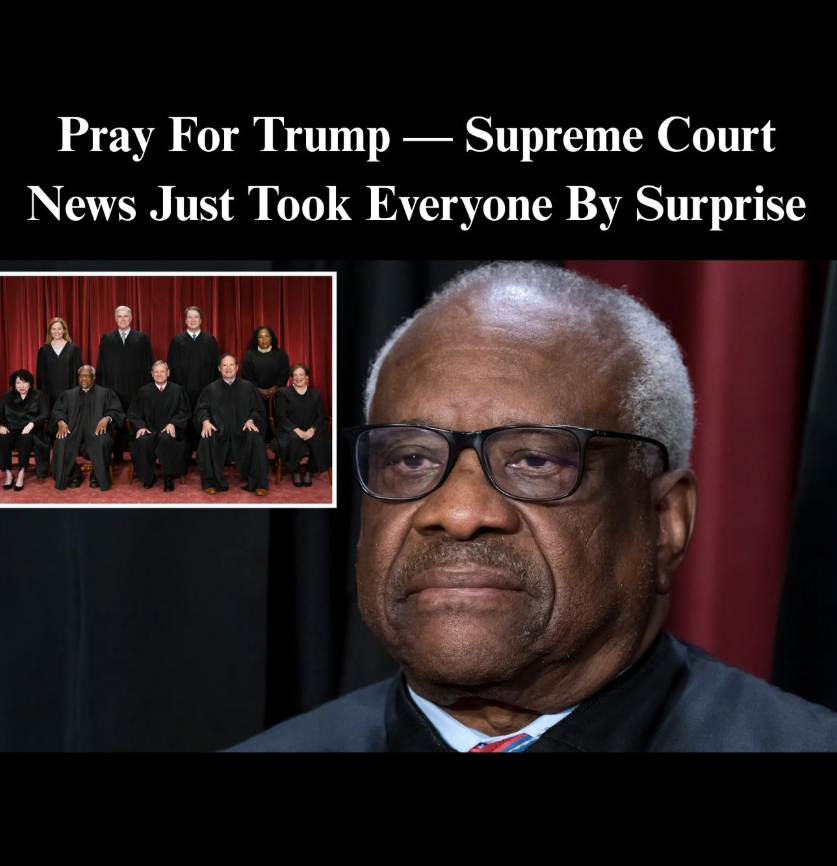
Along with a number of other conservative justices, Supreme Court Justice Clarence Thomas questioned well-known left-leaning attorney Marc Elias this week regarding a campaign finance law, expressing doubt about the law’s limitations on specific kinds of political contributions.
While Elias, a well-known election lawyer, argued to the high court that Congress has the authority to cap those expenses, the Republicans who filed the lawsuit contended that the coordinated political spending is protected speech and should not be restricted by Congress.
Individual contributions to political candidates are currently restricted by Congress, and the Supreme Court has previously struck a balance between permitting First Amendment-protected political contributions and permitting caps as a preventative measure against excessive influence and electoral corruption.