
This article may contain commentary
which reflects the author’s opinion.
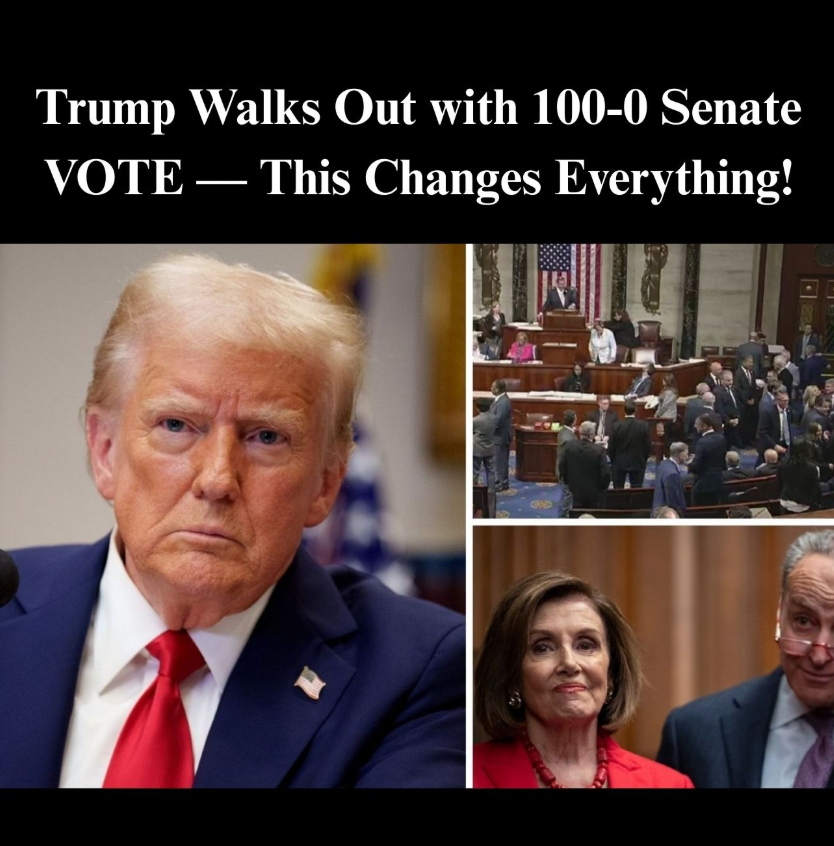
Senate Republicans pushed through the first procedural hurdle Wednesday as they moved to confirm nearly 100 of President Donald Trump’s nominees. The vote sets up a later decision on 97 of Trump’s picks and marks the third time Republicans have advanced a large bloc of nominees since changing Senate confirmation rules in September.
The final confirmation vote on this group is expected next week, Fox News reported.
If Republicans complete the process, they will have confirmed more than 400 of Trump’s nominees during the first year of his second term.
That total would place Trump well ahead of former President Joe Biden, who had 350 nominees confirmed at the same point in his presidency.
The nominees include former Rep. Anthony D’Esposito of New York for inspector general at the Department of Labor and two selections for the National Labor Relations Board, James Murphy and Scott Mayer, as well as others across nearly every federal agency.
Murphy and Mayer were included in the package after Trump fired National Labor Relations Board member Gwynne Wilcox, a move the Supreme Court upheld earlier this year.
This is Republicans’ second effort to advance the package after Sen. Michael Bennet of Colorado objected last week in an attempt to delay the process.
Senate Republicans changed the confirmation rules to break through Democrats’ months-long blockade of Trump’s nominees, limiting the new process to sub Cabinet level positions that can be approved with a simple majority.
One nominee in the original package, Sara Carter, a former Fox News contributor legally named Sara Bailey, was designated a “Level 1” nominee, meaning she would hold a Cabinet level post.
Trump selected Carter in March to be his drug czar as director of the Office of National Drug Control Policy.
Her inclusion meant Republicans would have needed to overcome a 60 vote threshold to advance the entire slate of 88 nominees.
That was unlikely given Democrats’ near unanimity in opposing several of Trump’s picks and their claims that some were not qualified to serve.
Republicans instead chose to assemble a new and larger package, adding nine more nominees to move forward under the revised rules.
Earlier this month, the Senate voted to confirm two federal prosecutors in North Carolina to serve as trial judges on the federal bench. Senators approved David Bragdon in a 53–45 vote to become a judge on the U.S. District Court for the Middle District of North Carolina.
They also voted 60–39 to confirm Lindsey Ann Freeman to the same court. The confirmations bring the total number of judges appointed during President Donald Trump’s second term to 21.
Trump previously appointed 234 judges during his first term, reshaping the federal judiciary with a conservative tilt.
Bragdon most recently served as the appellate chief at the U.S. Attorney’s Office for the Eastern District of North Carolina. Freeman was the second-in-command at the U.S. Attorney’s Office for the Middle District of North Carolina.
Trump announced Bragdon’s nomination on social media in August and highlighted his previous clerkship with U.S. Supreme Court Justice Clarence Thomas.
Bragdon told the Senate Judiciary Committee that Trump called him to congratulate him and said “that Justice Thomas spoke highly of me.”
Democrats and progressive groups opposed Bragdon’s confirmation, citing a Geocities website he operated while in college from 1997 to 2000 where he posted political viewpoints.
The website included statements describing abortion as “wrong because person or not, a fetus has just as much right to life as an infant does,” and argued that “there is enough of a logical link between the death penalty and deterrence to call for an increased use of the death penalty.”
He also wrote that “our welfare system should be a safety net and not a hammock.”
The progressive advocacy group Alliance for Justice said confirming Bragdon “would legitimize his extreme rhetoric and pave the way for dangerous shifts in the rule of law.”