Ronald Hittle was sacked as Stockton, California’s fire chief after being accused of wrongdoing. One letter called him a “corrupt, racist, lying, religious fanatic.” One reason he was fired was that he and other managers went to a church-sponsored seminar for Christian leaders during business hours.
Hittle tried to sue, saying that he was fired because he was a Christian, but lower courts said that his case wasn’t solid enough to go to trial. Hittle says that the Supreme Court’s test for judging accusations of job discrimination, which was set up more than 50 years ago, has to be looked at again.
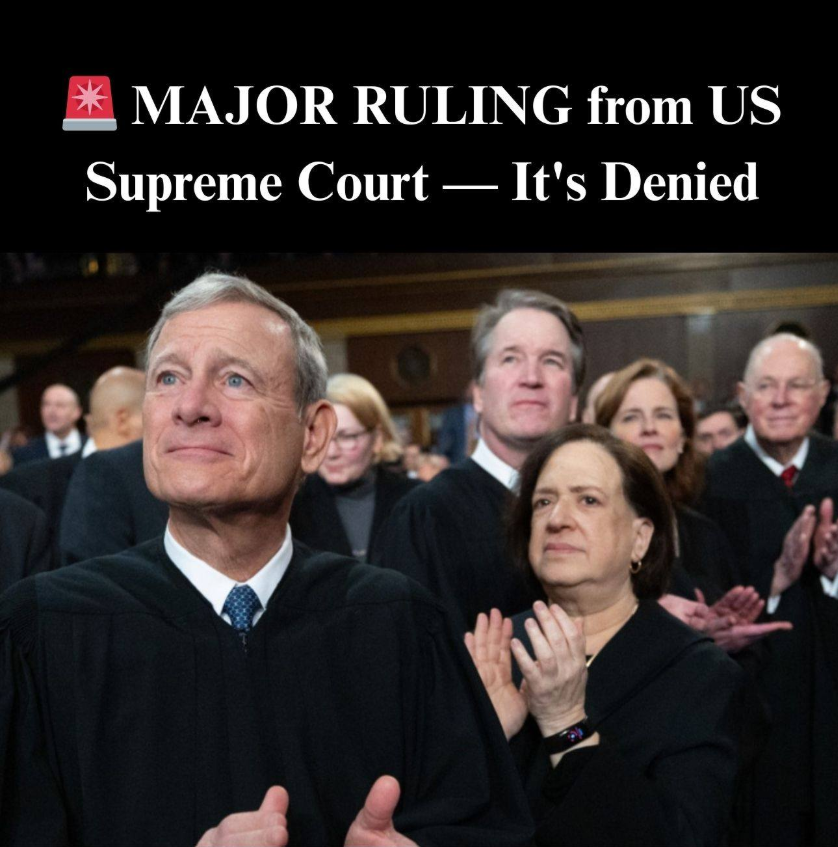
But on Monday, the Supreme Court turned down his case, avoiding a possible fight over religious discrimination at work at a time when the Court is also looking into issues related to religion in schools and tax breaks for religious groups.
Justices Clarence Thomas and Neil Gorsuch said they would have accepted the case. Thomas said that Hittle had enough proof of discriminatory intent and that his case may have made it apparent when workplace discrimination lawsuits should go forward, according to the source.
Hittle was fired in 2011 after an inquiry by the city concluded that he was not productive or good at making decisions, did not report time off, showed partiality, and went to a religious event with other managers while on the job, among other things.
USA Today said that Hittle went to the gathering, which was a church-sponsored conference for Christian leaders, at the city’s request for leadership training.
Hittle says he was fired because he went to the Global Leadership Summit. He says the deputy city manager accused him of being part of a “Christian Coalition.”
His lawyers told the court, “An employer can’t automatically avoid liability just because it had legal reasons as well as discriminatory ones.”
The city says that Hittle is lying about what the appeals court said and that there is no reason to look at the important 1973 judgment in McDonnell Douglas Corp. v. Green again, which is a “settled touchstone of employment-discrimination law.”
According to USA Today, the city’s lawyers told the court, “The City’s reasons for terminating (Hittle) were well-documented and entirely appropriate for the Ninth Circuit to rely upon.”
The U.S. Supreme Court also turned down an appeal this month that challenged Delaware’s ban on assault-style rifles and large-capacity ammunition magazines. They also turned down a lawsuit about Maryland’s handgun licensing requirements.
By doing this, the Court didn’t have to deal with two important decisions over the controversial topic of gun rights.
The judges turned down an appeal from a group of gun lovers and organizations that support gun rights. They wanted to stop Delaware’s ban on “assault weapons” and magazines that can carry more than 17 bullets. This was after a lower court decided not to issue a preliminary injunction.
Reuters said that these kinds of guns have been used in a number of mass shootings in the U.S., although FBI crime statistics show that most gun-related murders are conducted with pistols.
The judges also turned down an appeal by the gun rights group Maryland Shall Issue and other plaintiffs. They were appealing a lower court’s decision that affirmed the state’s licensing legislation as being in keeping with the Second Amendment right to keep and bear arms.
The judges turned down these two cases, but they didn’t do anything about two other appeals that were challenging Maryland’s ban on assault rifles and one in Rhode Island that was about large-capacity ammunition magazines.
Since 2008, the Supreme Court has always taken an originalist view of gun rights in important decisions, thanks to its 6-3 conservative majority.
In 2022, Delaware passed gun safety rules that make it illegal to own certain semi-automatic “assault” firearms, such the AR-15 and AK-47. However, those who owned these guns before the law went into effect can keep them if they meet certain conditions. The law also makes it illegal to have magazines with a lot of rounds, which affects devices that were owned before the law went into effect.
The people who are fighting against the law are people from the state who want to buy the restricted guns or magazines, a gun dealer, the Firearms Policy Coalition, and the Second Amendment Foundation.