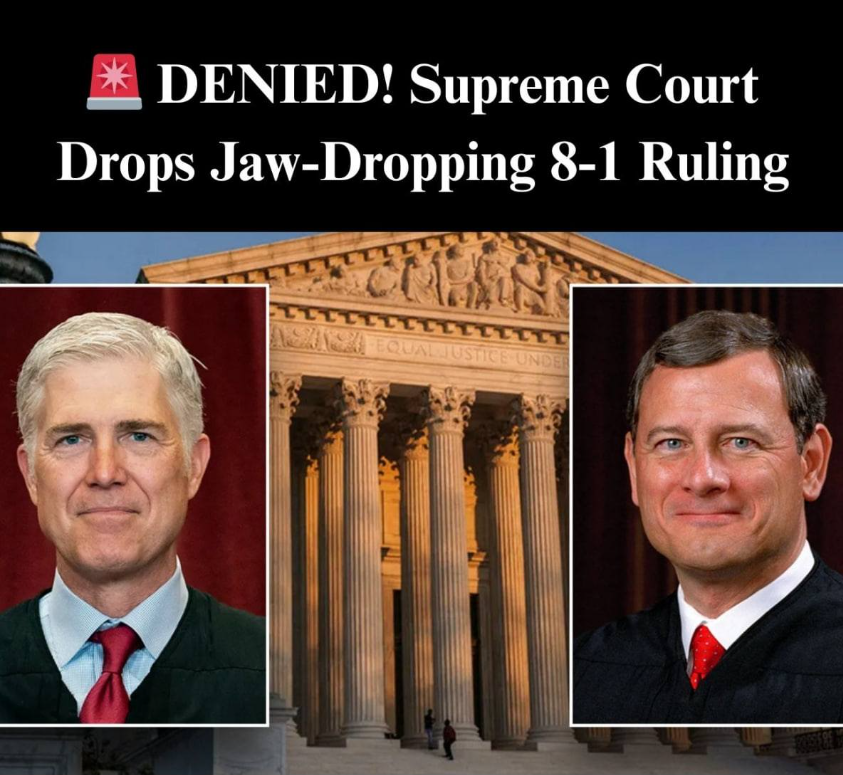

The U.S. Supreme Court rejected a challenge this week to the constitutionality of a federal law that bans the possession of a firearm by someone who has been the subject of a domestic violence restraining order.
The court holds that when an individual has been found by a court to pose a credible threat to the physical safety of another, that individual may be temporarily disarmed consistent with the Second Amendment.
The vote is 8-1, with Justice Clarence Thomas dissenting.
Chief Justice John Roberts wrote that, “Since the founding, our Nation’s firearm laws have included provisions preventing individuals who threaten physical harm to others from misusing firearms. As applied to the facts of this case, Section 922(g)(8) fits comfortably within this tradition.”
Discussing the application by the lower courts of the Supreme Court’s decision in New York State Rifle & Pistol Association v. Bruen, Roberts writes, “Some courts have misunderstood the methodology of our recent Second Amendment cases. These precedents were not meant to suggest a law trapped in amber.”
Otherwise, Roberts explained, the Second Amendment would only protect “muskets and sabers.”
“Why and how the regulation burdens the right are central to this inquiry. For example, if laws at the founding regulated firearm use to address particular problems, that will be a strong indicator that contemporary laws imposing similar restrictions of similar reasons fall within a permissible category of regulations.”
The Supreme Court has been busy lately.
The Department of Justice on Monday backed the state of Texas in its redistricting dispute, arguing that the new congressional map approved by the Republican-controlled Legislature does not constitute an unconstitutional racial gerrymander.
The ruling, for now, clears the way for the Lone Star State to implement its newly redrawn maps ahead of the 2026 midterms.
In an amicus brief, Solicitor General John Sauer, representing the Trump administration, said the lower court erred in blocking the map from taking effect. He urged the Supreme Court to intervene and overturn the ruling. Sauer wrote in his filing: “This is not a close case.”
Sauer argued that the lower court misinterpreted the rationale behind the Legislature’s decision to adjust five congressional districts in a way that favored Republicans.
He said the changes were driven by political considerations, not race, and therefore did not violate federal voting laws or the Constitution.
Shortly after the letter was issued, Gov. Greg Abbott, a Republican, added redistricting to the Legislature’s agenda, prompting a dramatic walkout in which state Democrats temporarily left the state in protest.
The lower court “misinterpreted the letter’s meaning; and more importantly, the court misunderstood the letter’s significance to the legislature’s adoption of the 2025 map,” Sauer argued.
The plaintiffs involved in the case, consisting of various voting and immigrant rights organizations, contended that Dhillon’s letter called for the disbanding of the coalition districts and the concentration of Black and Latino voters into different districts.
Texas’ mid-cycle redistricting battle is one of several conflicts emerging nationwide as President Donald Trump faces the possibility of a less favorable Republican House map in 2026.
In California, voters approved a last-minute ballot measure that would offset the five Republican gains made in Texas. Utah adopted a new map that benefits Democrats, while Virginia has begun steps toward another redrawing process that would also benefit Democrats.
Louisiana’s map, which favors the GOP, is currently awaiting review by the Supreme Court. Missouri also underwent redistricting, adding a GOP-favored seat, and Indiana’s legislature is considering the same thing next month, which would benefit Republicans.
The Department of Justice recently filed suit against California Gov. Gavin Newsom, a Democrat, contending that the state’s new redistricting plan was unconstitutionally driven by race — a position that contrasts with its stance in the Texas case, Fox News reported.
Justice Samuel Alito issued an administrative stay of the panel’s ruling, and the full Supreme Court could issue a more definitive decision on the map at any time